
It always starts the same way you meet someone online, they seem perfect, their messages feel sweet, and for a moment, you think you’ve finally met someone genuine. But slowly, the cracks begin to show. Their stories don’t match. Their behavior gets strange. Their attention feels… calculated.
These moments aren’t accidents. They’re warning signs. And if you can spot them early, you can avoid falling into the emotional or financial trap that thousands of people fall into every year.
This guide reveals the top signs you’re talking to a scammer, told in a simple, engaging, story-like flow so you can recognize red flags before they become regrets.
The Scammer Avoids Real Connection
A scammer doesn’t want a real relationship; they want control. And to maintain that control, they avoid anything that exposes their true identity.
Typical Avoidance Behaviors
- Refusing to video call
- Dodging voice notes
- Saying their camera is “broken”
- Giving long excuses for not meeting
- Sticking to texting only
A real person tries to build comfort and trust; a scammer tries to hide.
The Scammer Has Unrealistic or Perfect Photos
You know those photos that look too polished? Too glamorous? Too flawless? A scammer loves using:
- Model headshots
- Stolen images
- AI-generated faces
- Photos with no background clues
If everything looks perfect, it’s usually perfectly fake.
How to Spot Suspicious Photos
- Only one or two pictures
- No casual selfies
- Professional poses
- No friends or group photos
- Backgrounds that look generic or blurred
A real person has a past; a scammer has a gallery of stolen images.
The Scammer Moves Too Fast Emotionally
A scammer doesn’t waste time. They rush emotional intimacy because emotional people make easy targets.
Signs of Emotional Manipulation
- Saying “I love you” too soon
- Calling you “soulmate” after a week
- Making big promises
- Talking about marriage early
- Asking personal or sensitive questions
This emotional speed is a strategy not affection.
The Scammer Avoids Personal Details
A scammer fears being caught, so they never share anything that can be verified.
Common Red Flags
- Vague answers about work
- Confusing past stories
- Changes in their personal life timeline
- No real social media presence
- Inconsistent details
They reveal just enough to keep you engaged but not enough for you to confirm anything.
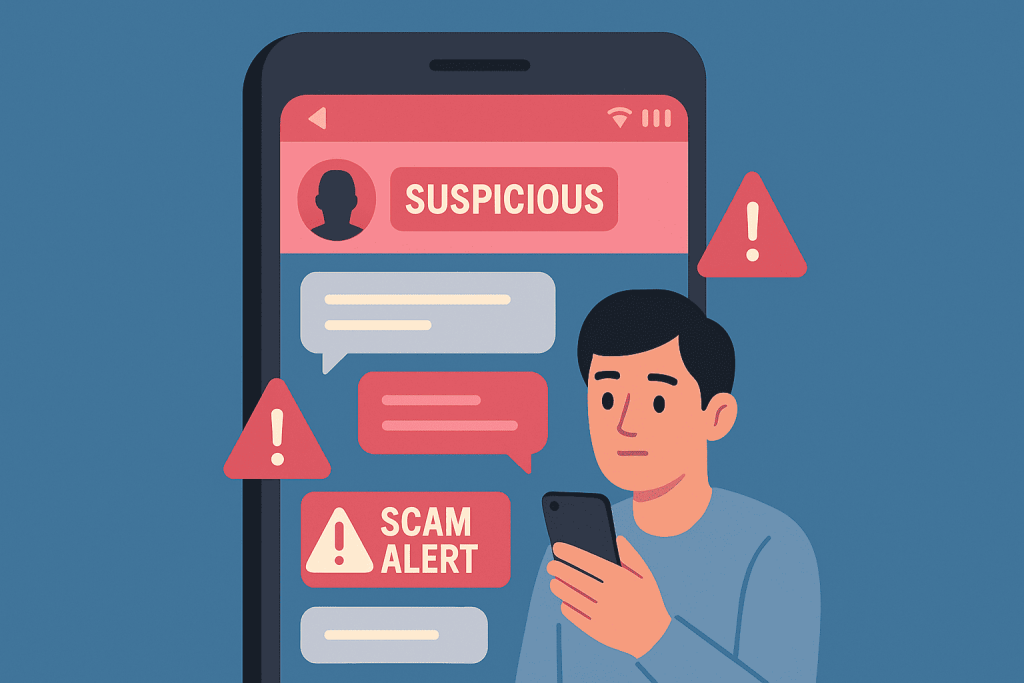
The Scammer Has Dramatic Life Problems
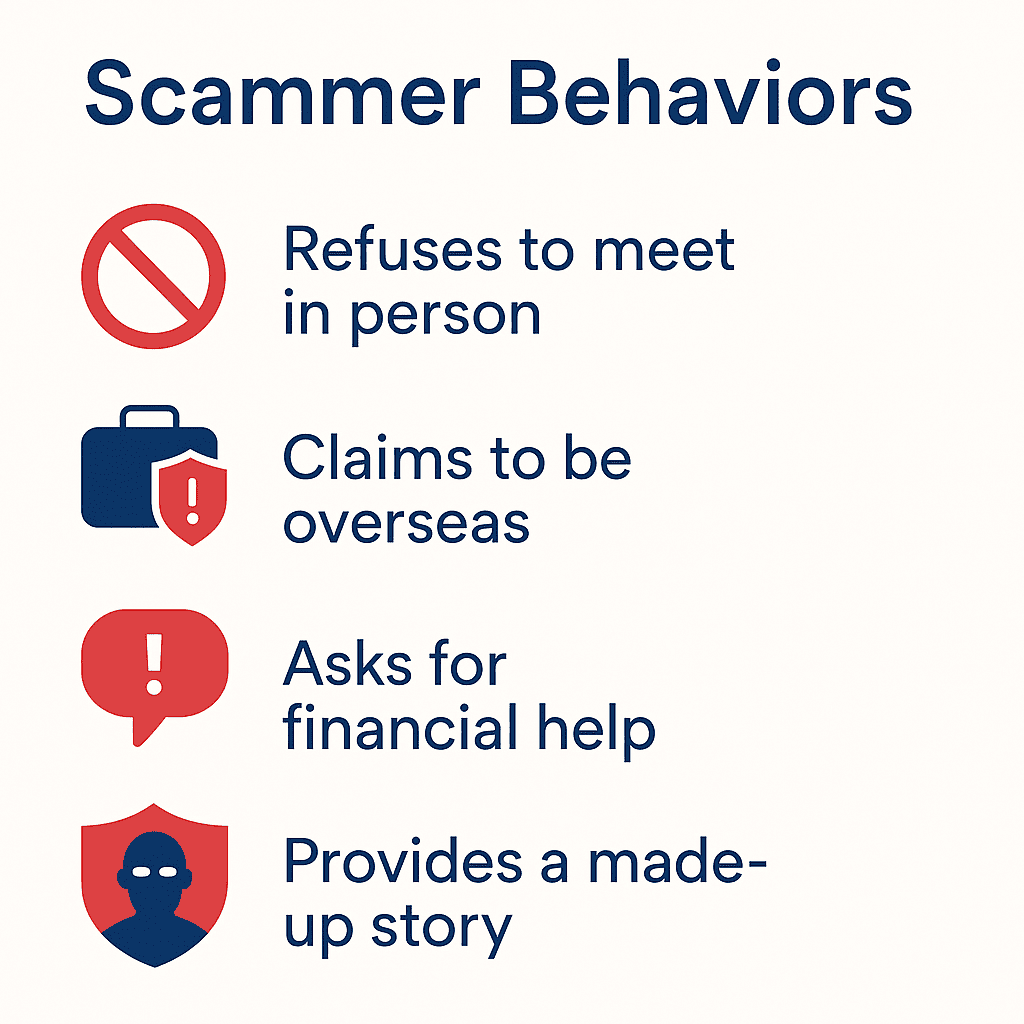
Scammers often use emotional stories to build sympathy. The goal is to make you feel responsible for helping them.
Common Dramatic Scenarios
- Family emergencies
- Sudden accidents
- Lost passports
- Sick relatives
- Tragic backstory
These aren’t real problems they’re emotional traps.
The Scammer Asks for Money or Favors
This is the biggest sign of all.
It might start small:
“Can you help me with a small amount?”
“My card isn’t working.”
“I just need it temporarily.”
Then it escalates.
What Scammers Commonly Ask For
- Money
- Gift cards
- Phone credit
- Crypto transfers
- Bank details
- Photos they can use as blackmail
A real person you’ve never met doesn’t ask you for money. A scammer always will.
The Scammer Avoids Meeting in Person
Even if they claim to be nearby, they always find a reason not to meet. That’s because their identity is fake.
Avoidance Excuses
- “I’m traveling for work.”
- “I’m stuck overseas.”
- “My job doesn’t allow leave.”
- “My phone got stolen.”
- “I’ll meet you next month.”
A scammer stretches the conversation just enough to get what they want your money or trust.
The Scammer Has Strange Typing Patterns
Have you ever noticed:
- Sudden changes in writing tone
- Grammar inconsistent with their claimed nationality
- Long unused jargon
- Switching between formal and casual texts
This happens because multiple scammers often use the same account.
You’re not talking to one person you’re talking to a team.
The Scammer Pushes You Off the Dating App
Every scammer does this, and for a reason: dating apps monitor conversations. Scammers hate being watched.
Apps Scammers Love to Move To
- Telegram
- Snapchat
- Signal
Once you move off the platform, they have more control and less risk of being caught.
The Scammer Avoids All Proof of Reality
If a person refuses every opportunity to prove they’re real, they’re hiding something.
Proof Scammers Always Reject
- Live photo
- Voice call
- Video selfie
- Shared location
- Meeting in a public place
A scammer avoids anything that confirms they’re fake.
The Scammer Tries to Make You Feel Guilty
Guilt is a powerful weapon. Scammers use it to keep you emotionally controlled.
Guilt Tactics
- “I thought you trusted me…”
- “You’re hurting my feelings.”
- “If you loved me, you’d help.”
- “I guess I’m not important to you.”
These emotional traps are designed to break your boundaries.
The Scammer Uses Pressure or Urgenc
Scammers love using time pressure because panic makes people easier to manipulate.
Urgency Examples
- “I need money right now!”
- “It’s an emergency; don’t think just help.”
- “Only you can save me.”
- “Please send it before the bank closes.”
No real relationship requires panic payments.
The Scammer Disappears When You Question Them
Once you start asking direct questions, a scammer often:
- Disappears
- Becomes angry
- Blocks you
- Changes topic
- Accuses you of being controlling
A real person clarifies misunderstandings. A scammer runs.
The Scammer Creates Fake Emotional Crises
If a scammer feels you slipping away, they often invent new drama to pull you back.
Common Emotional Manipulation Situations
- “I’m in danger.”
- “I’m stuck at the airport.”
- “Someone stole my bag.”
- “I’m getting evicted.”
- “I lost my phone.”
The goal? Reconnect you emotionally, then ask for help.
The Scammer Never Talks About the Future Authentically
They avoid real plans. Their “future” is always vague and dreamy, not practical.
Fake Future Promises
- “We’ll marry soon.”
- “I’ll move to your country.”
- “We’ll start a life together.”
- “We’ll meet when the time is right.”
These promises are empty tools to keep you invested.
Trust Your Instincts to Avoid a Scammer
You don’t need to be an expert to spot a scammer your intuition already tells you something feels wrong. When small doubts keep appearing, don’t ignore them. A genuine person creates comfort, consistency, and clarity. A scammer creates pressure, confusion, and fear.
Your heart deserves honesty, not manipulation. Keep these signs in mind, trust your instincts, and put your safety first every time.
FAQs
What should I do if I think I’m talking to a scammer?
Stop responding, block the profile, report them on the platform, and never send personal information or money.
Can a scammer be caught if I report them?
Many platforms investigate reported accounts, and consistent reports help identify scam patterns and remove fake profiles.
Why do scammers target dating apps?
Because dating apps connect people seeking emotional connection a vulnerable point scammers can easily exploit for money or personal gain.


