
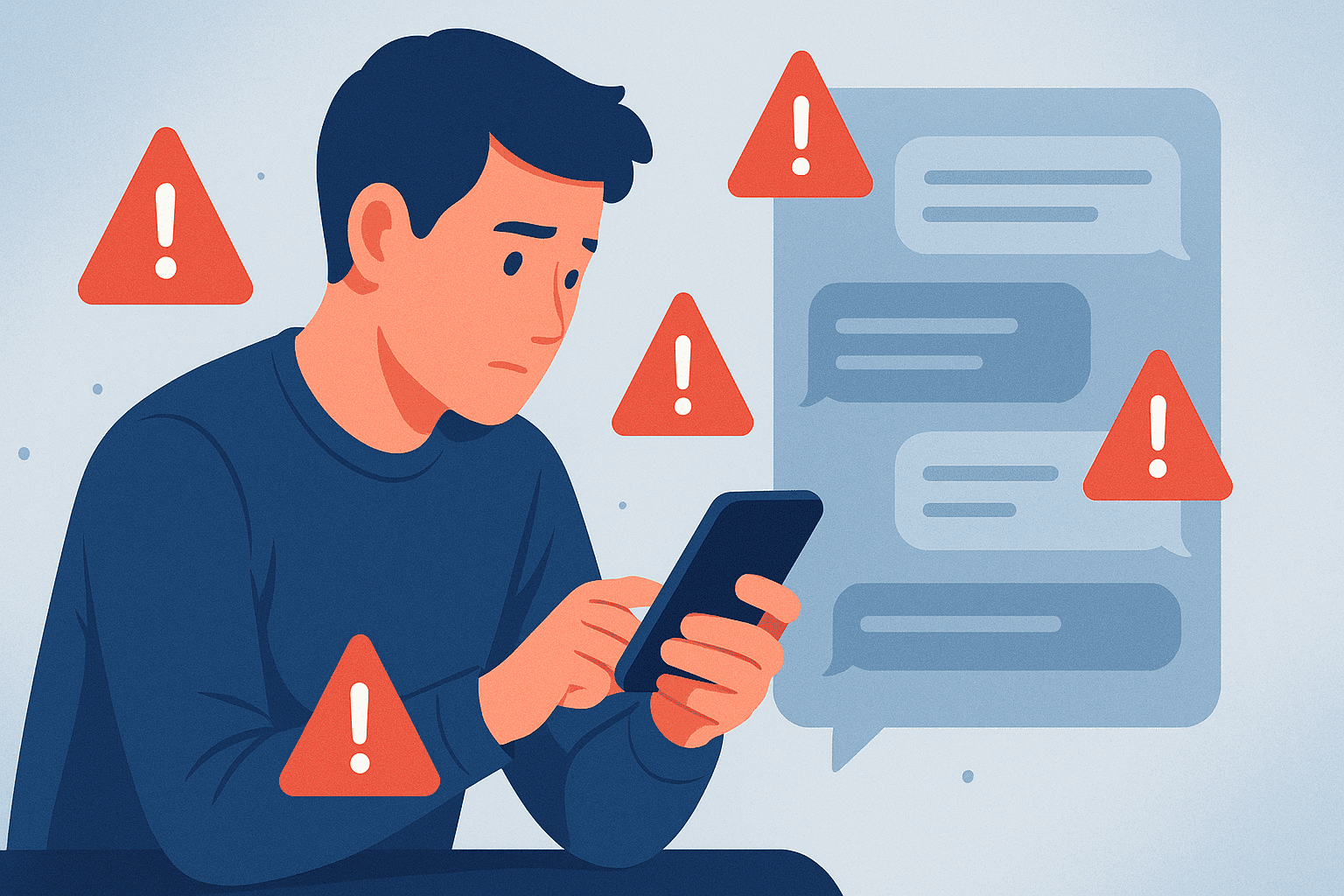
Online chats feel safe, easy, and comfortable. You type, you wait, you reply everything happens behind a screen where the world seems simple. But the truth is that modern digital conversations can carry invisible warning signs that many people completely overlook. These subtle clues, hidden inside friendly messages or emotional dialogues, can slowly pull you into unhealthy relationships, manipulation, or even online scams without you realizing it.
In today’s world, online chats are often where relationships begin. A stranger quickly becomes a connection, a connection becomes a comfort, and comfort becomes trust. But trust built through text is fragile because you can’t see body language, facial expressions, or real intentions. Every word is carefully crafted. Every emoji is placed with purpose. And sometimes, those messages come from people who want more than just your friendship or attention they want control, money, or emotional influence.
Understanding the warning signs hidden in online chats is not just about safety. It’s about protecting your emotional space, your identity, and your peace of mind. Once you learn how to recognize these clues, you gain the power to walk away before someone crosses a boundary you never agreed to.
Why Online Chats Can Hide Warning Signs So Easily
Online chats create a perfect environment for manipulation because everything looks normal on the surface. You see text, you feel emotions, you imagine personality but the real person remains invisible. Scammers, manipulators, or toxic individuals use this invisibility to shape their digital persona in whatever way benefits them.
Key reasons warning signs stay hidden in online chats:
- No real-time body language, which hides inconsistencies
- Text-based emotions that are easy to fake
- Instant replies that create false intimacy
- Profile pictures that may not be real
- Overthinking small interactions, making you doubt your instincts
- Curated responses, giving them time to plan manipulative answers
Online communication gives people power to design their personality instead of revealing their real one. This makes hidden warning signs extremely dangerous because you often notice them too late.
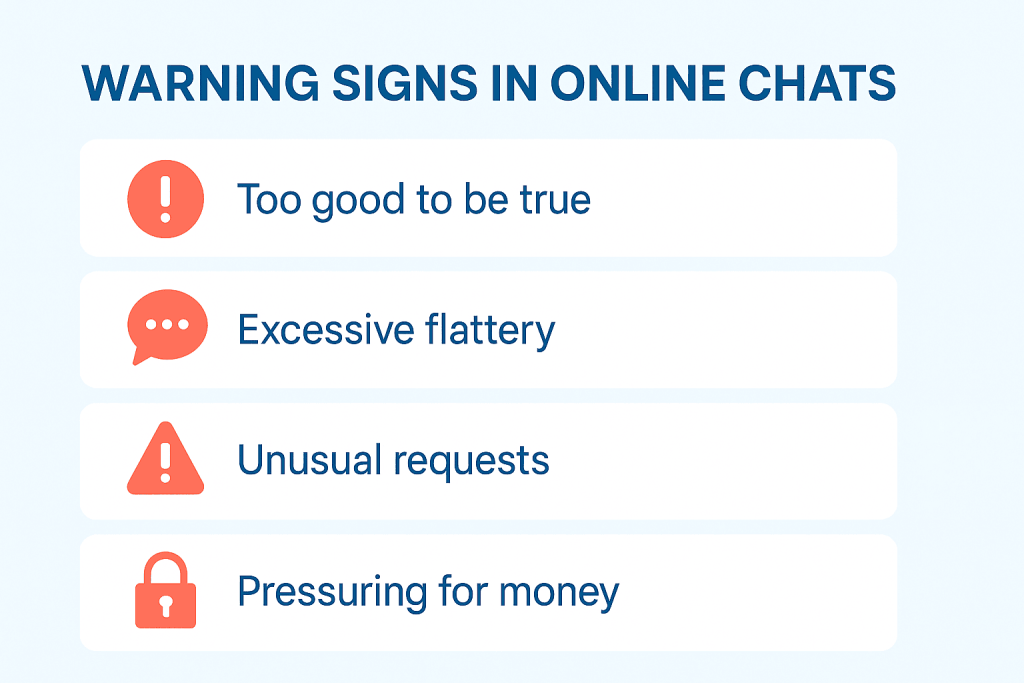
Early Warning Signs Hidden in Online Chats
In the beginning, everything feels sweet and natural. But small red flags inside online chats reveal the truth long before bigger problems appear.
Below are signs that something is off, even if the conversation feels smooth.
1. Online Chats Turn Too Deep Too Fast
A major warning sign hidden in online chats is emotional acceleration.
If someone starts expressing deep feelings, life stories, or intense attraction within days or even hours, it’s not romance it’s strategy.
This tactic is used by toxic individuals and scammers to build quick emotional dependency. They want you attached before you have time to think.
You may start hearing lines like:
- “I’ve never felt this connection with anyone.”
- “You’re the only one who understands me.”
- “I can’t believe how close I feel to you.”
The problem isn’t affection; the problem is speed. Genuine connections grow naturally, not urgently.
2. Online Chats Avoid Video Calls or Real-Life Proof
Another major warning sign hidden in online chats is avoidance of real identity verification.
People who hesitate to video call, send fresh photos, or share authentic details are hiding something, and they know you’ll notice it on camera.
Common excuses include:
- “My camera isn’t working.”
- “I don’t look good today.”
- “I’m too shy for video calls.”
But in reality, they are avoiding exposure.
Scammers and catfishers rely heavily on text because it lets them maintain their fake persona as long as possible.
3. Online Chats Include Emotional Manipulation Phrases
Manipulators often use subtle emotional triggers that seem caring on the surface but are crafted to control your feelings.
Examples:
- “I thought you cared about me…”
- “Why didn’t you reply? You made me worry.”
- “I feel like you don’t appreciate me.”
These messages are meant to create guilt and dependency. They slowly condition you to respond faster, share more personal information, and prioritize their emotions over your own.
4. Online Chats Slowly Introduce Financial Topics
This is one of the most dangerous warning signs hidden in online chats.
Scammers never start with money immediately. They build emotional trust first.
Then, they slide financial hints:
- “My bank is giving me issues.”
- “I’m stuck in a difficult situation.”
- “I just need help until I get paid.”
They are testing your reaction. If you respond with sympathy or concern, they know they can escalate later.
5. Online Chats Become Possessive or Too Demanding
Possessiveness is a clear red flag, especially when it appears early in the chat. They might get upset if you don’t reply quickly or if you talk to others online.
They might say:
- “Why were you online but didn’t reply?”
- “Who else are you texting?”
- “I only trust you when you’re talking to me.”
Healthy relationships don’t require monitoring your digital presence.
Psychological Tactics Used to Hide Warning Signs in Online Chats
Scammers and manipulators use psychological patterns that feel natural but are intentionally designed.
Common tactics include:
- Mirroring: Copying your personality to feel relatable
- Consistency flooding: Messaging constantly to build reliance
- Trauma bonding: Sharing deep, emotional stories to create sympathy
- Love bombing: Overwhelming affection to lower your guard
- Intermittent reward: Being sweet one moment and distant the next
Each tactic is carefully placed to confuse your emotions and make you ignore red flags.
How to Protect Yourself From Warning Signs in Online Chats
Learning to protect yourself starts with awareness.
Once you understand the patterns, you can spot manipulation immediately.
Practical protection steps:
- Don’t trust someone too quickly
- Slow down emotional conversations
- Request video verification
- Never send money online
- Don’t share sensitive information
- Set boundaries for texting frequency
- Pay attention to inconsistencies
- Discuss concerns with a trusted friend
Online safety isn’t about being paranoid it’s about being prepared.
How to Exit Unsafe Online Chats Safely
If you ever feel uncomfortable, you have every right to step back. Leaving an unsafe online chat should be strategic, especially if the person pressures or manipulates you.
Safe exit steps:
- Stop replying gradually
- Block them across platforms
- Keep screenshots for evidence
- Report the profile if necessary
- Avoid explaining too much; manipulators twist your words
Your emotional safety is more important than polite conversation.
FAQs
Are warning signs in online chats always obvious?
No. Most red flags are subtle and emotional. Manipulators avoid making mistakes early, so noticing small inconsistencies is key.
How do I know if someone is manipulating me in online chats?
If you feel pressured, guilty, overly responsible, or emotionally drained after conversations, manipulation may be happening.
What should I never share in online chats?
Never share personal details, bank information, passwords, ID photos, or emotional vulnerabilities with strangers.


