
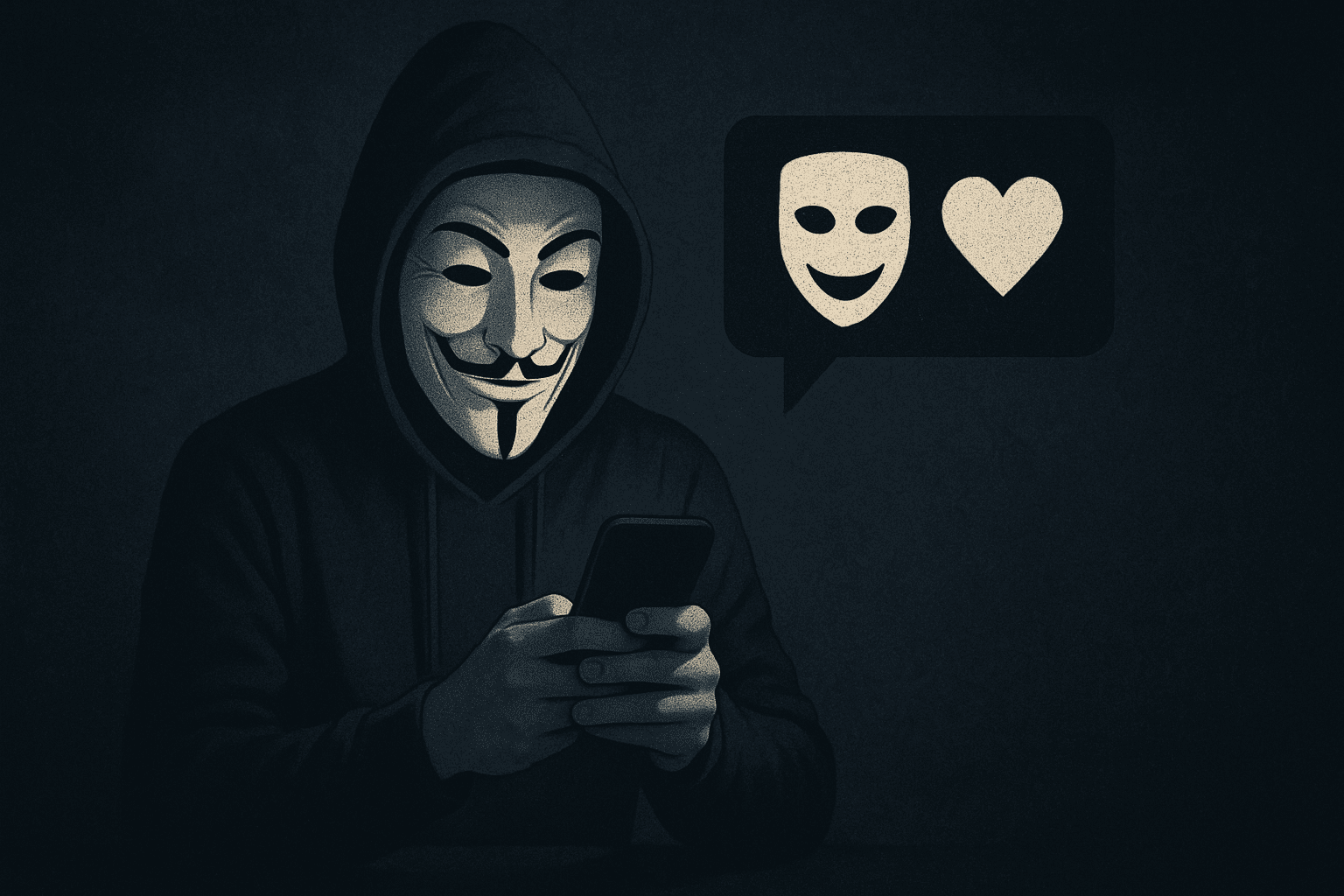
When people talk about digital scams, they often imagine a quick trap one message, one mistake, and everything collapses. But real romance scammers operate differently. Their biggest weapon is not money requests or emotional pressure… it’s Fake Trust Online. This kind of trust feels genuine, slow, emotional, and extremely believable. And that’s exactly why it works so well.
In 2025, digital scammers have upgraded their techniques. They use psychology, storytelling, and even AI-driven communication patterns to mimic real relationships. Victims don’t fall for the scam because they are careless they fall because scammers specialize in creating emotional comfort and psychological safety.
And that fake safety becomes the doorway to manipulation.
Fake Trust Online Starts With Emotional Mirroring
Every conversation begins with something small: a compliment, a shared interest, a relatable story. It feels harmless. But scammers use emotional mirroring to build fast compatibility.
How Emotional Mirroring Creates Fake Trust Online
Scammers listen carefully to:
- Your tone (serious, playful, emotional)
- Your insecurities (past heartbreak, loneliness, fear of rejection)
- Your dreams and goals (marriage, career, travel)
- Your rhythm (when you message, how you reply, what you enjoy)
Then they mirror it perfectly.
This creates the illusion that you found someone who deeply understands you a soulmate.
But soulmates don’t appear out of nowhere. Scammers study you like a script.
Fake Trust Online Deepens Through Predictable Consistency
Scammers know you feel safe around repetition. So they create daily routines.
Typical Scammer Consistency Patterns
- “Good morning, my love” at the same time every day
- Structured check-ins: lunch, break, bedtime
- Quick replies to show loyalty
- Matching your messaging energy
This consistency becomes comforting.
Comfort becomes attachment.
Attachment becomes emotional dependency.
Suddenly, you trust someone you’ve never met because they’ve become part of your day.
This method is known as trust pacing, a psychological tactic used in 2025 scam playbooks.
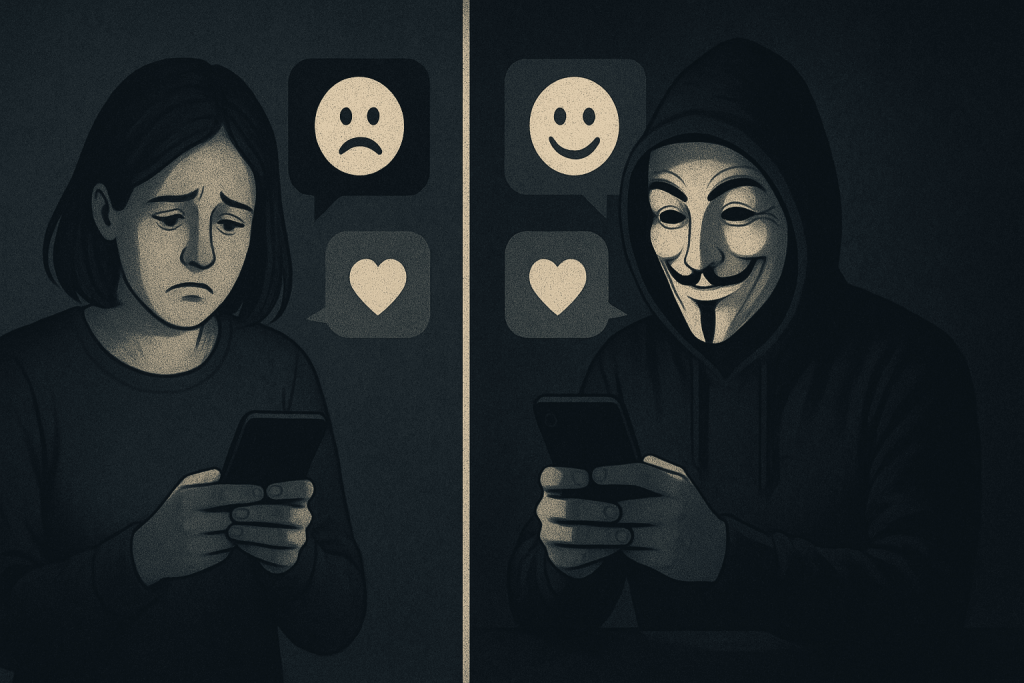
Fake Trust Online Grows Through Shared Vulnerability
Nothing creates closeness faster than shared secrets. Scammers know this. They strategically reveal “personal stories” to make you lower your guard.
Fake Vulnerabilities They Commonly Use
- “My wife passed away… I’m learning to love again.”
- “I lost my parents and feel alone.”
- “I’m struggling emotionally but I trust you.”
- “My ex cheated on me, so loyalty is everything.”
These stories are designed to:
- Trigger empathy
- Position the scammer as emotionally wounded
- Make you feel special and chosen
- Build an emotional contract
When you share your vulnerabilities back, the emotional bond deepens dangerously.
Fake Trust Online Strengthens With Flattery and Compliments
Scammers are trained to study your self-esteem. If you seem confident, they praise your intelligence or success. If you appear insecure, they admire your beauty or kindness.
Why Compliments Work
- They lower emotional defenses
- They create instant intimacy
- They trigger dopamine rewards
- They build romantic credibility
Scammers are not looking to compliment you they’re looking to condition you.
Fake Trust Online Feels Real Because It Builds Slowly
Modern scammers no longer rush victims.
They understand that slow trust feels real trust.
Slow-Build Techniques They Use
- Avoiding early money requests
- Waiting weeks before asking for favors
- “Proving” their loyalty with long messages
- Sharing fake life updates, photos, routines
- Building a digital relationship step by step
This slow pacing makes their final request feel natural.
Fake Trust Online Turns Dangerous When They Introduce Exclusivity
One of the strongest psychological hooks scammers use is exclusivity.
Phrases They Commonly Use
- “I’ve never felt this comfortable with anyone.”
- “I don’t talk to anyone else just you.”
- “I want something serious with you.”
- “Can I trust you with my heart?”
Why exclusivity works:
- It isolates you emotionally
- It makes you afraid of losing them
- It builds loyalty to a stranger
- It makes skepticism feel like betrayal
This is when scammers fully control the emotional environment.
Fake Trust Online Escalates Through Urgency and Crisis Stories
Once enough trust is built, scammers introduce small “tests.”
Common Crisis Scenarios
- “My bank account is frozen.”
- “I need help with a bill.”
- “I lost my wallet.”
- “My child needs emergency help.”
- “I’m stuck at an airport.”
These situations are engineered to trigger:
- Panic
- Sympathy
- Care-taking instincts
Because your mind is emotionally invested, your logical reasoning becomes weaker.
Scammers rely heavily on this emotional tunnel vision.
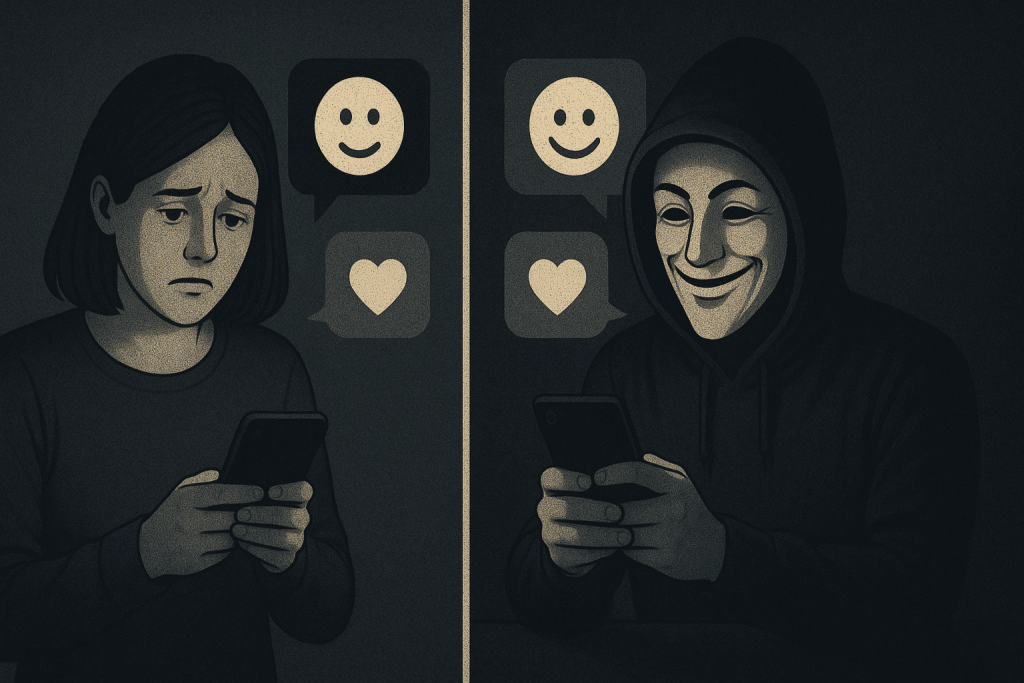
Fake Trust Online Requires Cutting You Off From Reality
To keep you dependent, scammers slowly influence your offline thinking.
How They Try to Isolate You
- Discouraging you from talking to friends
- Creating jealousy about real-life people
- Making you hide conversations
- Making you feel guilty for questioning them
They turn themselves into the center of your emotional universe.
Fake Trust Online Ends With Manipulation and Extraction
Once trust reaches maximum strength, scammers transition to the extraction phase.
Types of Extraction
- Money
- Gift cards
- Bank transfers
- Cryptocurrency
- Personal data
- Private photos or videos
- Access to accounts
By the time they ask, victims feel emotionally obligated.
This is not weakness this is psychological conditioning.
How to Protect Yourself From Fake Trust Online
Practical Safety Tips
- Video call early (scammers avoid real-time calls)
- Never rely on text-only relationships
- Verify photos through reverse image search
- Keep online and offline life balanced
- Watch for emotional manipulation patterns
- Talk to someone you trust if something feels off
- Set boundaries quickly
FAQs
Why do victims fall for fake trust online?
Because scammers create emotional safety, consistency, and routine. It feels like a real relationship, not a scam.
How do scammers make their trust-building believable?
They study your personality, mirror your emotions, use fake vulnerabilities, and build slow emotional intimacy.
What’s the fastest way to detect fake trust online?
Request a live video call early. Scammers cannot maintain real-time presence and will always avoid transparency.


